Amethyst is not on the surface
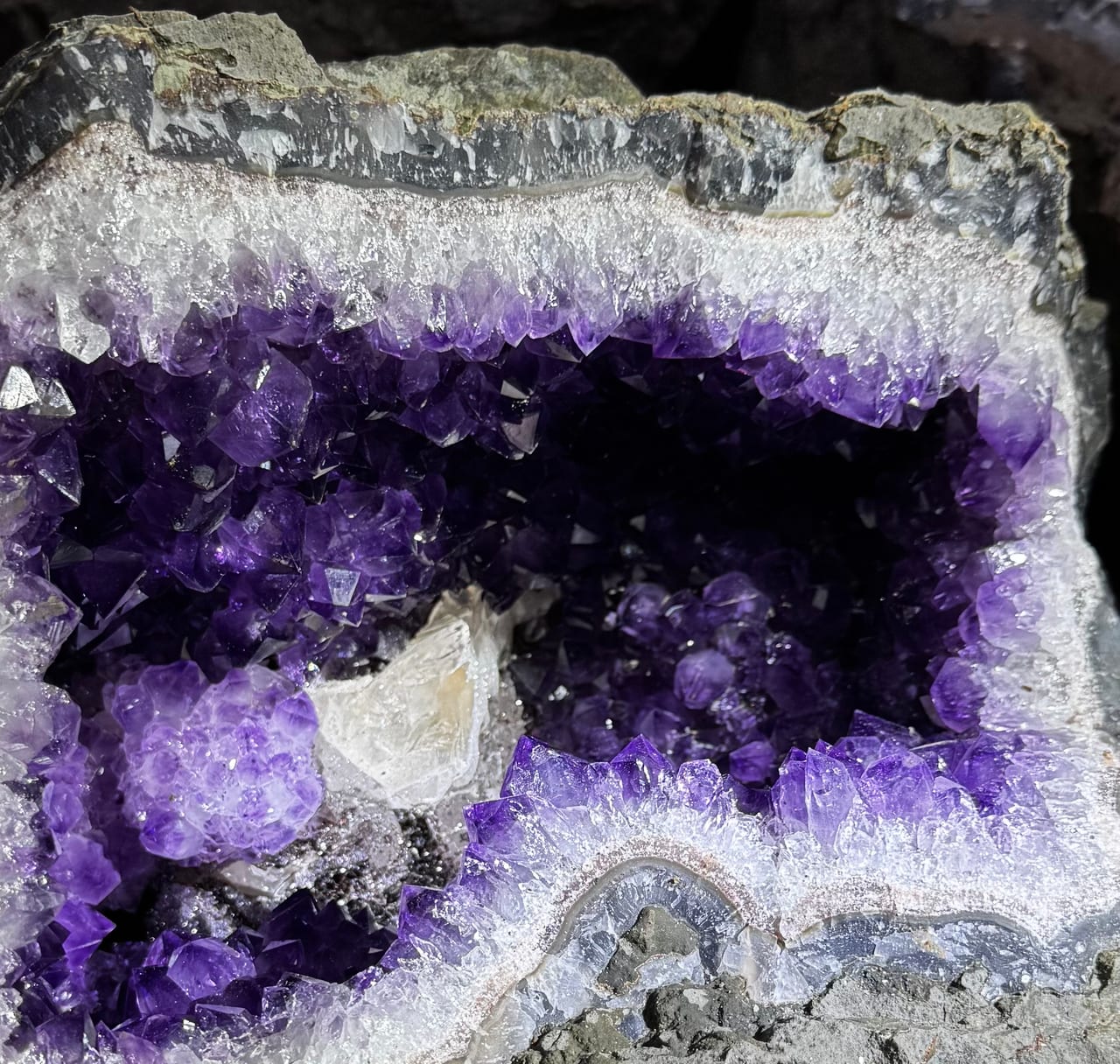
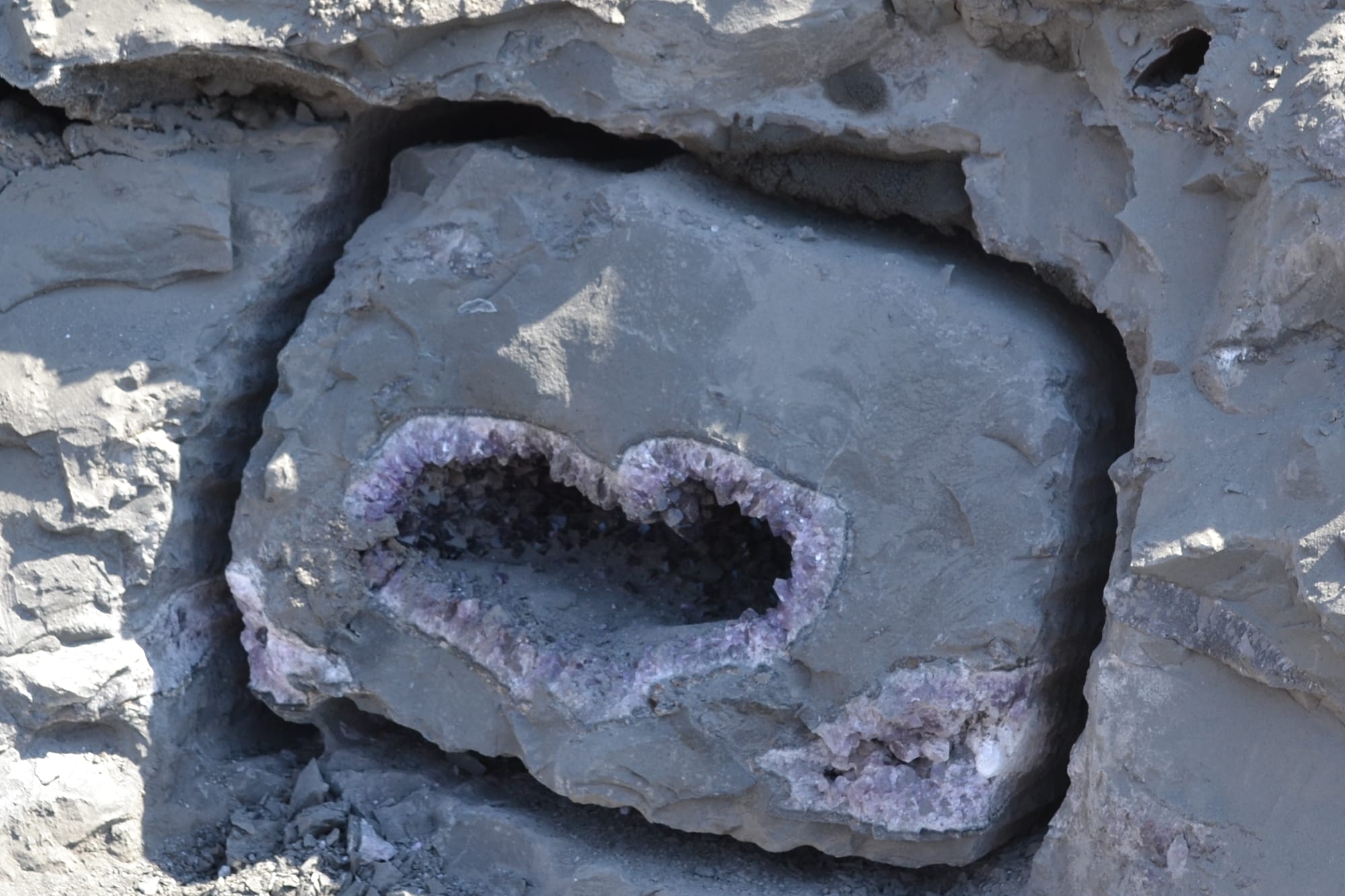
In Los Catalanes, amethyst lies in a level of the basalt with large cavities: the geodes. To reach it, the soil and weathered rock above it must be removed first. At the quarry, everything that is removed is called overburden.
Where the basalt has been weathered over time, the geode separates from the rock more easily. In sound basalt, the rock stays attached to the geode, and taking it out whole is slow work.
What sets an Artigas geode apart
The geologists who have studied Los Catalanes point to two features of its amethyst: an unusually dark violet and the presence of stalactites in some geodes.
A stalactite is a vertical column inside the cavity. It has an agate core, sometimes hollow, that is later coated with colorless quartz and amethyst. It is not common, and it is one of the signatures of this stone.
A 130-million-year-old rock
The basalt of Los Catalanes is part of the Paraná-Etendeka volcanic province, which covers one and a half million square kilometers. It formed in the Early Cretaceous, between 138 and 128 million years ago, as Gondwana was breaking up and the South Atlantic Ocean was beginning to open. The lava came out in successive pulses and left flows stacked one on top of another.